
The rules of Scratch Ticket Radio are simple. During a trip to a record store, I put aside $10 to specifically spend on a few used 45s. The $10 limit is firm, so I end up with different amounts of records depending on their prices. Consistent with the gambling analogy, I do not listen to them in the store before I buy them, and I cannot select 45s by artists that I already know or that contain songs that I am already familiar with. Then, once I have them home, as if taking a quarter to a scratch ticket, I listen to each song to determine its quality. If I come out with more keepers than duds, the ticket as a whole can be considered a winner.
Special Edition: Jamaica at 45 RPM
January 2025
As noted in a previous edition, Mystic Disc in Connecticut has a large number of 45s, all available for $1 a pop. During visits while I was picking things up following regular Scratch Ticket Radio rules, I also grabbed a number of Jamaican singles. I was mainly interested in finding releases on as many different labels as I could. Across various stops, I ended up with 70 singles from 54 labels. However, some of those records broke the rules because I knew the bands or the songs already. Not all, of course, but enough to make me put the pile that was accruing aside for special treatment. At one point the owner noticed what I was doing, and he gave me a bit of the backstory. As it turned out, a friend of his who had a large collection of Jamaican records had passed away, and so these singles were now going back out into circulation. Rest in Peace to a fellow vinyl obsessive and fan of Jamaican music.
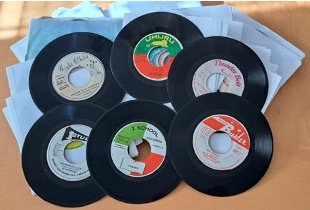
As I was pulling these singles out of the mini-crates, I noticed that most of them were probably from an era when dancehall was the dominant genre. I don’t particularly like dancehall, due to the really repetitive rhythms and general misogyny of the lyrics. I’m not big into the genre’s celebration of gun violence, either. However, I had set a goal for myself and no amount of foreboding was going to get in my way. And indeed, most of them turned out to be dancehall. And dreadful. In Jamaican fashion, the B sides tended to be an instrumental “Version” of the A side. That meant if the A side was no good, there was no chance for the B side to redeem the 45.
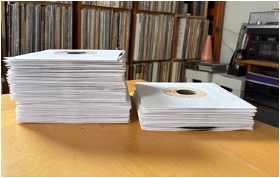
In this photo, the stack on the left is records that got played once and were deemed unworthy of revisiting. The stack on the right were records I wanted to listen to again. This did not mean the song was good, only that there was something noteworthy about it. Upon subsequent listens, many of them got moved to the pile of records that needed a new home. I only ended up keeping 14. Luckily, I have a Jamaican neighbor who DJs the summer block party that happens on my street, so the next time I see him I’m going to offer up a bag of 45s. He may take one look at it the contents and be like, “Um, no thank you.”

Fitz Bryan Lord Creator and the Prince Buster All Stars
Evening News / Good for Creator (Prince Buster /1965)
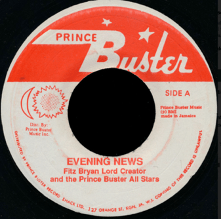
(A) At first, the sound of Evening News was like an oasis of melody in a desert of dancehall. I instantly relaxed into the ska beat, digging the warm horns and bright, friendly vocals. “Ah, yeah – here’s the stuff,” I thought. But as it continued, I came to realize that the song is actually kind of cheesy and it brought to mind Byron Lee and the Dragonaires, which is never a good thing. Lord Creator was originally from Trinidad, and appears that this is a ska-version of his earlier calypso hit.
(B) Good for Creator is a better tune, mostly because it is more upbeat. However, if my main complaint about dancehall is that it is the same thing over and over, perhaps I should bite my tongue given the fact that I like ska.
Note: The A Side of my copy is mis-labeled, as Fitz Bryan is the composer of the song and Lord Creator is the singer. The B-side is also mis-labeled as Prince Buster and the All Stars’ My Ticket. I guess when the label is named after you, staff might feel compelled to put your name on everything.
Phillip Fraser – Back to Africa (Razor Sound /1978?)
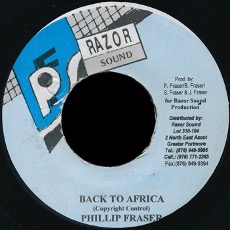
Fraser was a devoted rastafari, and his music was part of the roots reggae movement. His output is a mix of conscious themes and love songs. Fraser set up several record labels to try and navigate the music industry with his ethics intact.
Back to Africa has a mellow groove, nice bass and the relaxed vocals he was known for. He said growing up that he liked Sam Cooke, Jerry Butler and Curtis Mayfield and that puts his smooth style in context. He worked with Scientist at times, which makes sense given Scientists’ unbusy approach to production. This is a song for the culture, with a straight forward chorus: “Going back to Africa, because I’m Black.”
Gailads – Dance Pon Corner (Night Child /1981)
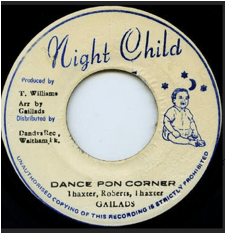
The Gaylads released a lot of music, and I’m not sure why they are credited here as the Gailads. It is likely a spelling error on the part of the record company rather than the band trying to rebrand themselves. The song was also released as Dance Pon the Corner. This seemingly random variation is not uncommon in Jamaican releases. The song itself has a strong soul influence. This is not a surprise, since the Gaylads were a vocal trio that made a name for themselves during the rock steady era. 1981 seems late in the day for this type of tune, so I wonder how it was received in Jamaica. I think it is fine, but nothing to get too excited about.
Note: It looks like Night Child only had three releases. There are several other labels with this same name.
Roy Rayon – Give Thanks & Praise (Thunder Bolt /1987?)
The song celebrates 25 years of Jamaican independence, and it won the National Festival Song Competition (one of four that Rayon received). It is a mix of mid-century gospel and reggae with some country touches and a tight horn section. To my ears, it’s a foot-tapper that goes down easy. Rayon shout outs key historical figures in the fight for freedom (e.g., Marcus Garvey) and thanks God for having Jamaica’s back. The label says it was sponsored by D&G Ginger Beer, which I have tried. I like ginger ale in a pinch, but give me the real bite of a ginger beer any day.
Toots and the Maytals – Careless Ethiopians / Beautiful Woman (Nyahman /1981)
(A) I figured Careless Ethiopians was going to be a diss track, but I didn’t know in which direction. I thought it might be some internal rasta-business, with Toots calling folks on the carpet for not following essential precepts. However, Toots came from a Seventh Day Adventist background, so it could be taken as a sarcastic critique of rastafarianism itself. Seems like there was potential for some serious beef either way. Maybe I can start a conspiracy theory about the motivation behind that time he got hit in the head with a vodka bottle while performing in Richmond, Virginia. That was fucked up. The song’s alright.
(B) Beautiful Woman has a pronounced Hawaiian flavor to it. This is not surprising, given that Toots liked country music, and country was influenced by the music of Hawaiian slack-key guitars around the turn of the previous century. The song reached #1 in New Zealand, which is surprising, because it is dull.
Note: I don’t know what Nyahman refers to, since nyah has different meanings. Any ideas?
Toots and the Maytals – Do Good All The Time (Nyahman /1982)

Like Careless Ethiopians, this is a real mix of genres. You get hallelujah sung with a Hawaiian melody, country-style harmonica, a reggae beat and a female backing chorus. I’m not sure I like it, but I appreciate how disoriented I was.
Andrew Tosh – Poverty is a Crime (Observer /1988?)
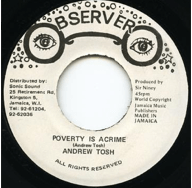
Andrew is Peter Tosh’s son, and his vocals are reminiscent of his dad. The track is dancehall adjacent, but not so much that it is annoying. I’m down with the message, but unfortunately the song kind of just sits there. I get the sense that it would have been better had it been cut in an age that was less reliant upon digital production techniques.

Early Black – Amen (Dennis Star /1988)
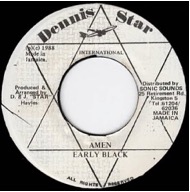
A kids’ choir joins Early Black for the chorus, singing “Amen.” Between the patois and the delivery, it is really hard for me to follow. He definitely walks through various parts of the Christian Bible. He refers to stories of creation and destruction in the Old Testament, and to Paul as the author of Romans. I’m not sure what is going on beyond the surface level. I would assume it is a commentary on contemporary Jamaica, but it is not a conversation I can follow. His discography is a mix of more culture-focused songs and ones about women being sexy. He was also known as Early B, short for Early Bird, because he would arrive at shows well before time. He was shot to death in a club in Dorchester (MA), and the murderers have never been identified.
Flourgan – Keep Way (Central Zone /1989)
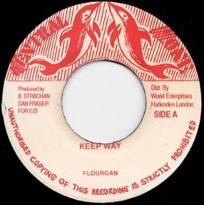
I think the label is another typo, as his name is typically spelled Flourgon. Apparently, he picked up that nickname because of his love of dumplings. Even more than with Early Black, I really couldn’t follow most of the lyrics beyond the basics. It seems to me to be a boasting track. “You don’t mash up the dance? Keep Way!” That is, if you cannot bring it when performing, Mr. Flourgan suggests that you stay a good distance away from those who can. He successfully sued Miley Cyrus because her 2013 song We Can’t Stop used lyrics from We Run Things, a hit he had in 1988. “You gonna bite my words? Keep Way!“
Junie Ranks – Wanted List (Mister Tipsy / 1993)
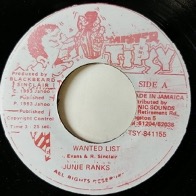
Junie Ranks is a pioneer, as she was one of the very first women to cut dancehall records. A number of her early tracks were response records, countering songs by men rating women’s attractiveness and proclaiming their own sexual prowess (e.g., Gi Mi Di Buddy, Dibby Dibby Man, etc.). For this song, I think she is providing a list of things she finds desirable in a partner. However, I really have no friggin’ idea. Also of note is the wacky-ass label name and logo.
Red Dragon – Bust Blank (Dragon /1990)

Randomly, Red Dragon is Flourgan’s brother. Apparently, their DJ clash record was the first between brothers. He started his career as Redman, but changed his name after he had a hit with dragon in the title. Good call. I didn’t think I would like this track, as it is all about the guns. However, it is pretty darned catchy (except for the odd, woozy bridge). Like a lot of other genres, I guess I can get with dancehall in very small doses.

Cornell Campbell – Conversation (Roof International /1990)
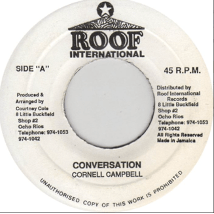
This song, actually titled My Conversation, was originally done by The Uniques. Their version is a nice slice of rock steady. Campbell’s slowed down and reggae-fied version is bland. If I had heard the song without knowing the original, I’m not sure I would have given it the time of day. Apparently, there are some singles where the label correctly refers to song as My Conversation, so I guess the one I got is some variant.
Charlie Chaplin – It Takes Culture (Mountain Lion /1980s)
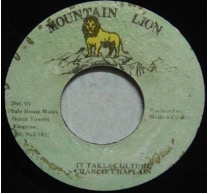
First off, their name is kind of a cover. The song itself uses the Lyn Collins Think (About It) samples that are at the heart of Rob Base and DJ EZ Rock’s It Takes Two and literally thousands of other songs (the record scratch and somebody going “yeah”). Chaplin here modifies it to suggest that “it takes culture.” However, this is a boasting track, not a conscious tune. He quotes MLK to talk about his own work spreading music around the world (“Free at Last!”). Whatever, dude.
Marcia Griffiths – I Don’t Know How To Love Him (Harry J /1971)
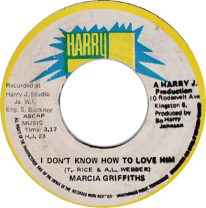
I like Marcia Griffith (e.g., Feel Like Jumping), but this doesn’t rise above the drab original from Jesus Christ Superstar. I generally don’t like musicals, so your results may vary.
Governor Massa/Errol Dunckley – If You Should Lose Me (M&D /1989)

Since the original is one of the greatest songs of all time, there was really no place for this cover to go but down. And down it goes. It sounds like they put the track through a “dancehall” filter on GarageBand. It is like any number of hip hop songs that use a sample of a well-known song or melody for the chorus, while the rest is garden variety rapping (or here, toasting). It is like the parts of the song have nothing to do with each other. Two other things bug me about this single. First, it says “Adapted” like it is a folk song of some unknown provenance. Second, Governor Massa is a wicked messed-up name.
Paper Rose and Jah Screw – Study You Book (Ram Jam – 1988)
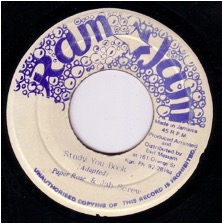
I thought this track was going to be a religious thing (given the devout nature of other singles in the pile), but if I had thought for more than a millisecond about Jah Screw’s name I would not have had that mistaken notion. This is a dancehall track loosely based on the Sam Cook song What A Wonderful Word. In this version, anyone interested in getting with Jah Screw is told that all that academic book-learning won’t help them. Instead, they need to study Jah Screw. This song is so bad, I want to know why it was made and what people thought about it. The vocals are really, really annoying. It is in the running for worst song of all time, and I have listened to a lot of songs.
Max Romeo – Misty Blue (Advance – 1975)
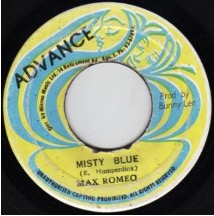
Exactly what you would expect a straight-forward reggae cover of Misty Blue would sound like. They give song credit to Englebert Humperdink, but it was actually written by Bob Montgomery (not the Red Sox catcher who was the last player to bat not wearing a helmet). When listening to this, you can hear why some Jamaican musicians pushed for the creation of more indigenous sounds instead of the frequent revisiting of hits from the US.
Jamaican 45 Labels

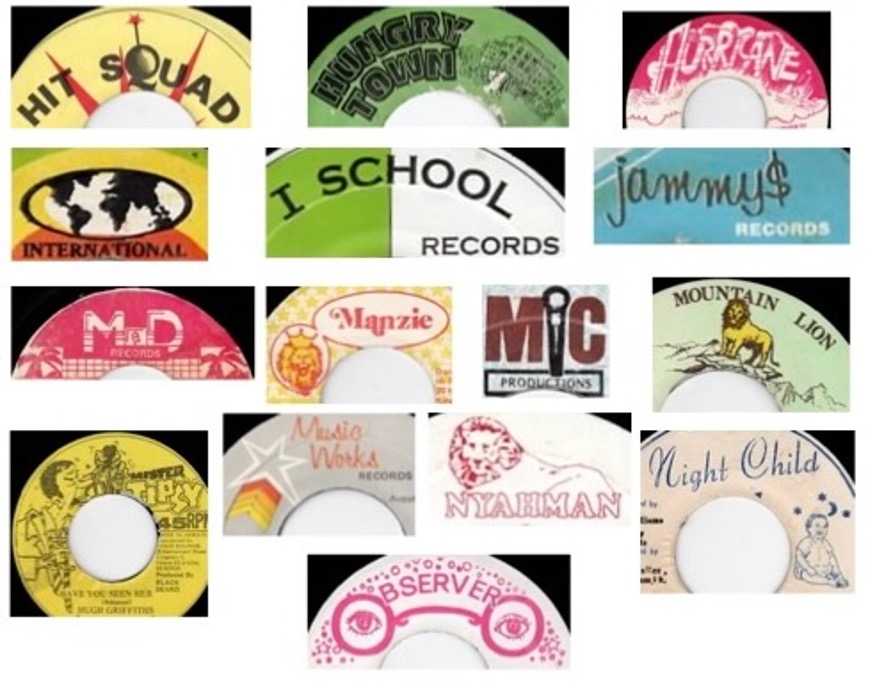
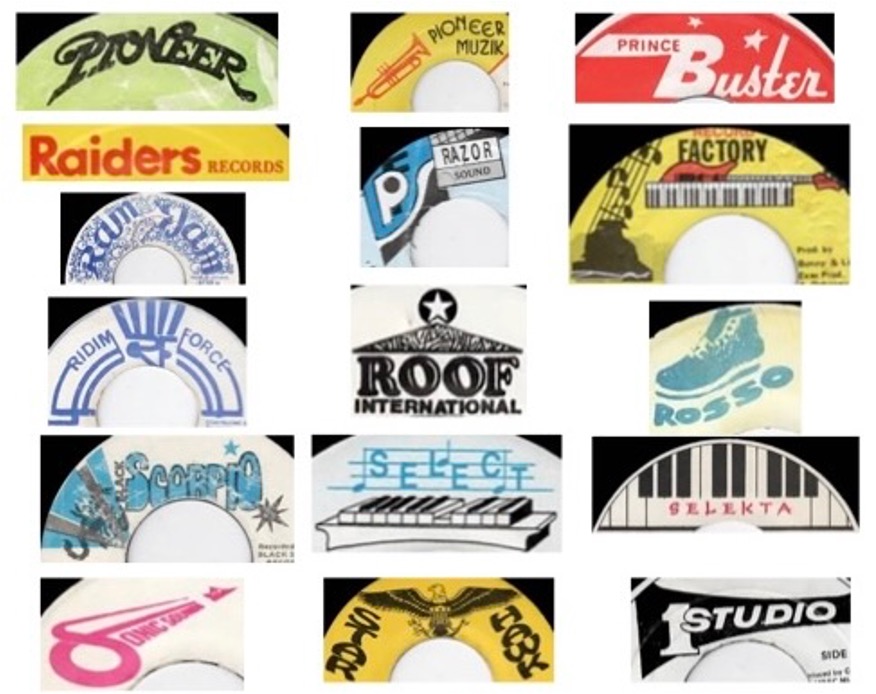
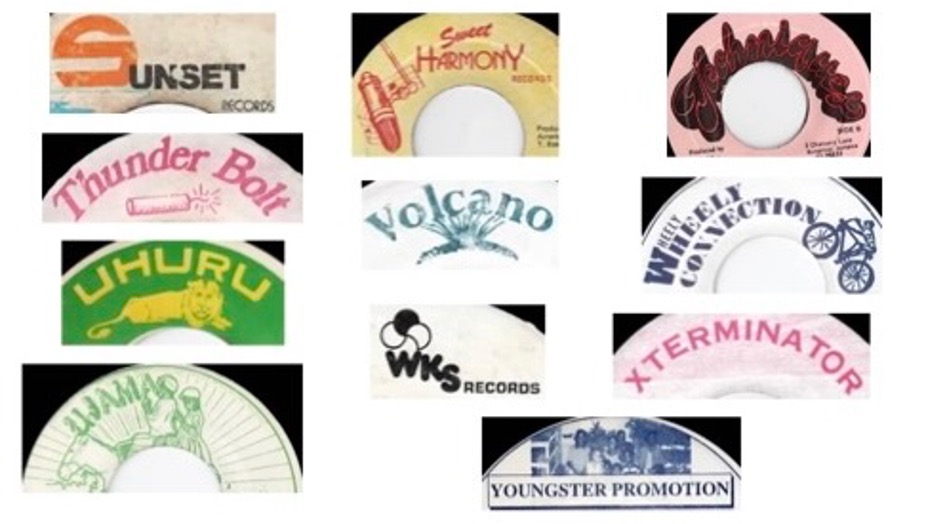
Scratch Ticker Radio Award for Graphic Design on a Jamaican 45
Third Place Uhuru
Second Place Prince Buster
First Place Night Child


