
The rules of Scratch Ticket Radio are simple. During a trip to a record store, I put aside $10 to specifically spend on a few used 45s. The $10 limit is firm, so I end up with different amounts of records depending on their prices. Consistent with the gambling analogy, I do not listen to them in the store before I buy them, and I cannot select 45s by artists that I already know or that contain songs that I am already familiar with. Then, once I have them home, as if taking a quarter to a scratch ticket, I listen to each song to determine its quality. If I come out with more keepers than duds, the ticket as a whole can be considered a winner.

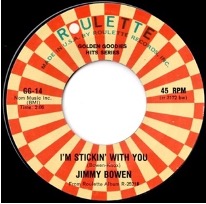
#1: Jimmy Bowen
Roulette (1957)
“OK, let’s make this here rockabilly record. Moody guitar? Check. Resonant bass? Check? Echo-friendly studio? Check. Song? Song?! We forgot the damn song!” These two tracks have all the acoustic hallmarks of rockabilly without anything else, including tunes. Fans of the time disagreed, as this incredibly milquetoast single was somehow a 1,000,000 seller. Despite his first release finding success, Bowen’s career really didn’t go anywhere. He eventually made a name for himself as a producer, especially of past-the-zeitgeist singers like Sinatra, Dean Martin and Sammy Davis, Jr. In fact, he was behind the board for Strangers in the Night and Everybody Loves Somebody Sometime. You can hear hints of that atmospheric but listless approach in these two songs.
I have a few other Roulette singles. Apparently, they were tight with the mob, perhaps even more so than other labels of the time. For example, at one point, Roulette was a front business for the Genovese family. One of the owners, Morris Levy, eventually was found guilty of extorting money from an FBI informant.
Fascinating history, but two duds – off to a bad start.
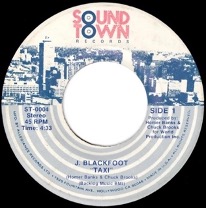
#2: J. Blackfoot
Sound Town (1983)
When I picked this up, I was unaware that J. Blackfoot was a member of the Soul Children, so I don’t think invalidates the selection. One reason for that might be that I never actually thought that much of the Soul Children, and I lumped them in with lots of other middling, later-period Stax acts. Taxi is fine, if not genre expanding. The singer tells the driver to speed up, run red lights and ignore stop signs because he has to get across town before his woman takes up with another guy. If I’m the driver, I’m thinking that that seems to be the very definition of a you problem. Based on the title, Where Is Love seemed like it was going to be another tune about romance, but it is actually a socially-conscious number about the state of the world. Particular empathy is given to children and sex workers, both groups trying to survive in a cold world. I’m down with that.
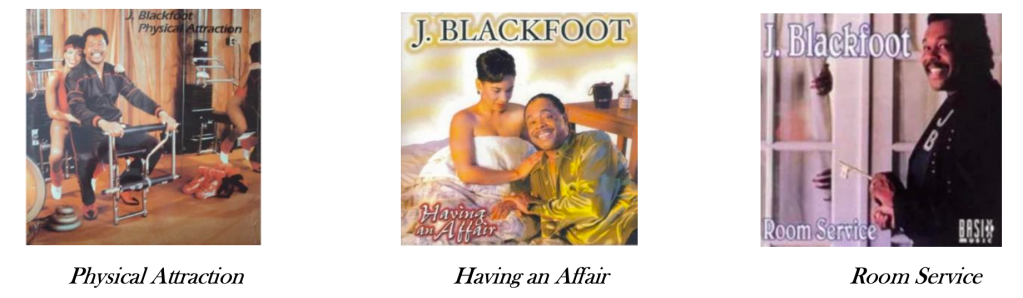
I couldn’t find out much about Sound Town records. Discogs lists 39 releases, most of which are by J. Blackfoot. The Soul Children released songs about getting busy, including with folks you are not supposed to be getting busy with. Based on his later recordings, it looks like J. stuck to what he thought was his lane.
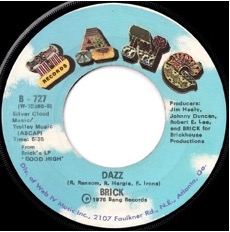
#3: Brick
Bang (1986)
Not to be confused with the Dazz Band. Their name apparently stood for danceable jazz. Here, the song title Dazz stands for disco jazz. Brick had another song called Dusic. I can hear my sister’s voice in my head – “That’s fupid.” I’m not really a disco guy, and I’m definitely not a flute guy, so Dazz is not my cup of tea. The B side is smooth jazz and terribly dull.
Bang was set up as an independent off-shoot of Atlantic Records by Bert Berns, Ahmet Ertegun, Nesuhi Ertegun and Gerald (Jerry) Wexler. The label name is an acronym, derived from the first letters of their first names. The company had a number of huge hits, including ones with Neil Diamond (Solitary Man – another classic song about people getting busy with folks they shouldn’t be getting busy with) and Van Morrison (Brown Eyed Girl). They eventually lost Diamond over artistic differences, and Bern’s widow chased Morrison off (in part because she blamed arguments with Morrison for her husband’s cardiac-related death). Bang was soon absorbed into the larger label ecosystem, existing mainly as a rights holder for those earlier hits.
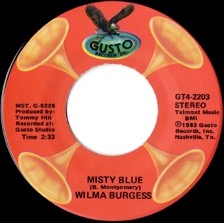
#4: Wilma Burgess
Gusto (1983)
Both songs here bring to mind the countrypolitan style of Patsy Cline, and that is not surprising. Burgess was signed by Cline’s manager after her death, thinking she might be able to fill the gap that created. Burgess also knew Cline personally, and was at her combination 30th birthday party and housewarming just six months prior to Cline’s accident. Burgess later bought the house, famously finding previously unknown recordings of Cline that had been stashed away there. These songs don’t match the best of Cline’s, but they are not bad. Burgess was in the Jayne Mansfield movie Las Vegas Hillbillies (which seems a chore to watch), but she never became a huge star. However, she had a solid career.
It has been suggested that within the business-side of country music she was an out lesbian, even if her public facing persona had no suggestion of that. People have noted that most of her songs use gender-neutral pronouns, apparently at her request. There is other circumstantial evidence, as well. Burgess owned, ran and performed at The Hitchin’ Post – Nashville’s lone women-only bar. She also owned another venue, Track 9, that just happened to be across the street from The Women’s Room, Nashville’s first known lesbian bar. Who knows what the story was, but she seems like the kind of interesting character you could write a good country song about. For example, she was reported to have been a good poker player and took Ernest Tubbs’ and his bus driver’s money while on tour with them.
Gusto as a label is hard to pin down. They had plenty of country and old-timey groups, but they also had some blues and R&B releases. Not sure if it is an outlier in their catalog, but they also put out a number of Redd Foxx adults-only party records. Foxx would certainly have spiced up the Gusto company holiday party.
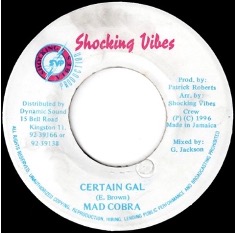
#5: Mad Cobra
Damsel Pandimonium
Shocking Vibes (1996)
OK, I knew this probably wouldn’t be good. I could tell from the label and the year that it was going to be some kind of dancehall track. I don’t really like dancehall because of the overall vibe and the repetitive nature of the songs, but I could not turn away a record with a song called Damsel Pandimonium. Unfortunately, it was as bad as I expected. However, I learned a valuable lesson; don’t buy any Jamaican singles with versions on the B side as part of Scratch Ticket Radio for a simple reason – if the A side is bad, it is almost a guarantee that the remix on the flip side is also going to be bad. Good thing I don’t actually gamble.
Note: I hadn’t known that Pandemonium is the capital of Hell in Milton’s Paradise Lost, and that he created the word. Thanks for unintentionally sending me on that quest, Mad Cobra.
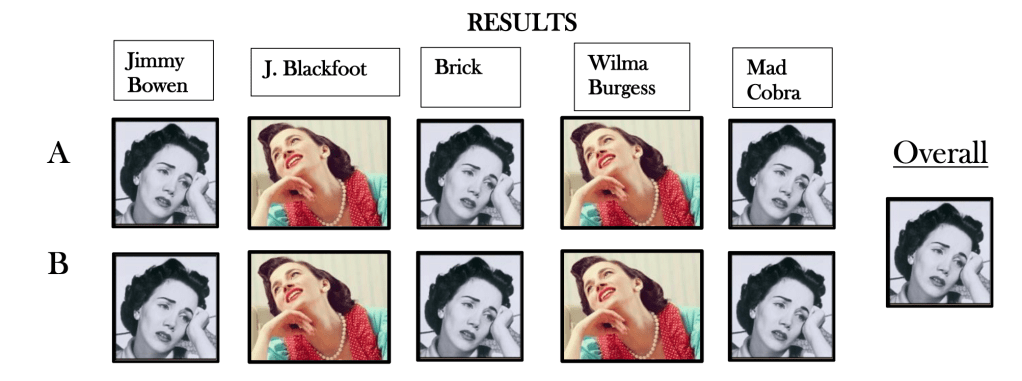
Well, it is unlikely that the J. Blackfoot or Wilma Burgess songs will find their way onto my 2023 year-end mix, but that’s OK. In very different ways, their stories provide insight into two genres that I don’t know much about. Let me know if you want to get your hands on some off-brand rockabilly and dusic and I’ll bring you 45s next time we grab some coffee.

