This past summer, my kids and I joined my cousin, her kids and her mom on a vacation to Finland. I had never been, but we have family and friends over there and I had been looking forward to seeing the country for myself for a long time. My cousin did much of the planning, which I’m thankful for. Starting in Helsinki, we moved counterclockwise – first to Tampere, then to Pori (where the family is), then to Turku, and finally back to Helsinki. Although we were traveling together, we were not joined at the hip. In addition to shared activities, each group had their own side excursions and adventures.
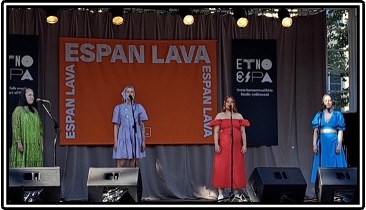
On the first day, we walked down to the harborside to get dinner. As if the city knew I was coming, the restaurant was across from a performance space where a quartet of women were singing traditional songs that I believe were from Karelia (click on this image and others that are framed by a similar border to see video clips). I dig this kind of music (e.g., Hedningarna’s Karelian Visa and early period Värtinnä), so I was captivated. They provided some explanations in English, so much so that somebody in the audience yelled out “Puhu suomeksi!” [Speak in Finnish!]. That bit aside, this moment really set the tone for the rest of trip, and in large part I made sense of my experience based on the music and sounds I heard. What stood out the most was a pervasive multilingual mixing of traditions, both new and old, indigenous and adopted.
I know this mixing is not frictionless, and Finland has not escaped nationalism, racism, xenophobia and the other ills of the modern state. However, there are clearly people doing the necessary work of building community. One example of this is a pair of musicians performing a traditional international gay anthem during Pori’s Pride Festival. They sang in English, but I feel like the song can be understood by speakers of all languages.
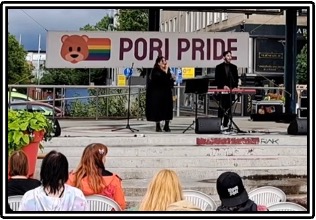
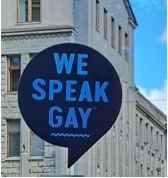
Or by speakers of a distinct global dialect that at least one store in Helsinki was conversant in. In keeping with expectations about Finnish comportment, the folks in the crowd did not respond with energetic dancing in the square, but I saw some very earnest head nodding and just the slightest movement of hips. I found these subtle signs of solidarity to be charming.
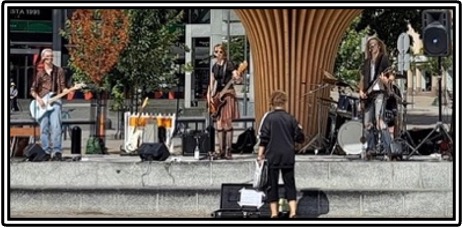
In Turku, a hard rock band had set up in a city square and was blasting away at a pretty loud volume. People acted like this was a normal thing to happen, and went about running their mid-afternoon errands. This is actually not surprising, since Finland has the most heavy metal bands per capita in the world (70.6 bands per 100,000 people, well ahead of second place Sweden that only has 45.5/100,000). What really impressed me, however, was this older woman who walked right up to the band, donated some change, and then stood stock still in the midst of the audio assault. Total OG move.

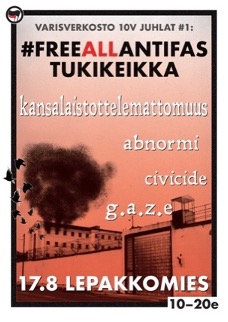
Speaking of heavy metal, I hoped to go to this show sponsored by Varisverkosto but ended up having dinner with some Finnish friends who had lived in New Jersey for a long time. Varisverkosto is an anti-fascist organization and the show was a fund raiser for anti-fascists in Hungary who are on trial. I did get to have coffee with a couple of people from the group, and they gave me the lowdown on contemporary Finnish politics. You can get more information about them at https://varisverkosto.com/
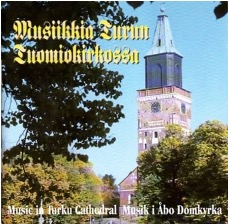
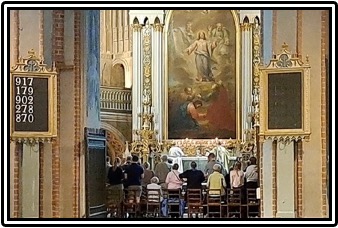
Turku is also known for its large cathedral, built in the early 1300’s. We happened to be there on a Sunday, so we got to hear part of the service. The acoustics perfectly complemented a large pipe organ to create the dense but clean sonority you expect in places some people consider sacred. As with the hard rock band, I couldn’t understand the lyrics, but I didn’t need to in order to catch the vibe. I took a copy of a CD they were giving out for free, so I tossed a few euros in the collection box. As expected, listening to the songs at home is not nearly as interesting as being there.
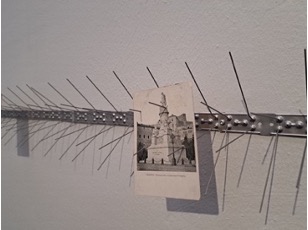
Once back in Helsinki, we went to a modern art museum named Kiasma. I was impressed with a piece by Runo Lagomarsino (“One Flew Over the Cuckoo’s Nest”) that consisted of several touristy postcards impaled on a section of those anti-bird spikes you see on some buildings.
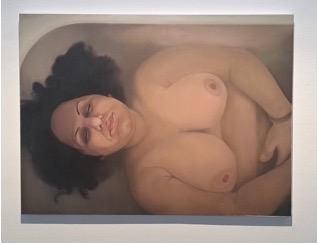
There was also a deeply moving self-portrait of herself in a bathtub by Sepideh Rahaa, an Iranian immigrant living in Finland.
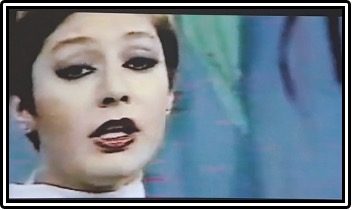
Then, as I was wandering the halls, I started to hear the voice of the Iranian singer Googoosh, who famously did not leave Iran at the time of the Islamic Revolution and was unable to leave, or perform, for several decades. It was a recording of Ayriligh (گوگوش – آیریلیق), which is one of my favorite songs by her. I followed the sound until I came to a video installation created by an Iranian expat. Over a screen recording of them doing a websearch about Googoosh, they shared their memories of Iran and their experience of leaving it, physically, emotionally and spiritually. I had only ever seen the Googoosh video on my laptop, so I was mesmerized to see it taking up the whole wall of a museum. I sat down in order to watch the entire video from the beginning, pleased to run into Googoosh in Finland.

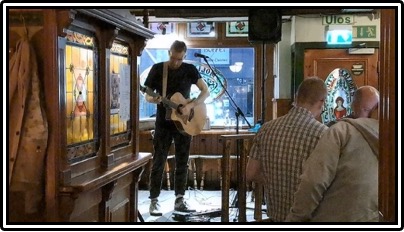
My younger kid really wanted to get a beer so we headed to Molly McGuire, an Irish pub not far from Helsinki’s main train station. I got a pint of Guinness that came complete with a drawing of a forest on the head. In front, a guy with an acoustic guitar was singing 60’s Soul standards. How nice to bump into Otis Redding, too.
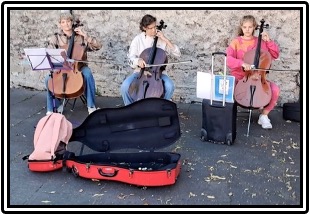
Helsinki is just across the water from Estonia, and you can grab a ferry to Tallinn that takes just about two hours. So we did. We spent the better part of the day exploring Old Town Tallinn, an old walled city that is now a mix of the expected tourist traps and actually interesting people and places. Near the top of the spiraling cobblestone streets there was a plaza with a great view of both old and modern Tallinn. As we were walking up, a trio of cellists were finishing up their instrumental version of Love Will Tear Us Apart (if I recall correctly). They then shifted gears to share a musical chestnut from a very different genre. Later, I stopped in a bookstore, where I ended up buying a book in English about the Estonian composer Arvo Pärt. While looking over the shelves, I realized the store was playing There is Light That Never Goes Out. For better or worse, the music of the 1980’s never seems to be too far away.
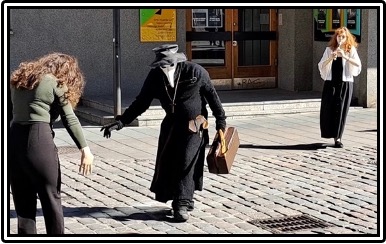
Outside the store, a man was dressed as a plague doctor. To the accompaniment of a woman playing a flute, he was alternately playfully harassing passers-by or dancing with them, depending on their gender. I’ve actually been seeing more people dressed like plague doctors out and about, so I’m not sure if it was only a bit of tourist-bait cosplay or illustrative of a more generalized response to impending planetary doom.
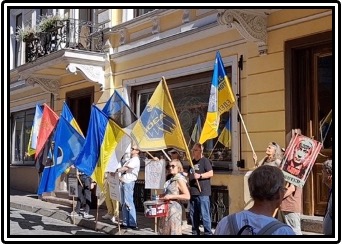
On one of the main avenues I noticed a large number of signs protesting Russia’s invasion of Ukraine posted on a metal fence that had been placed in front of a building. Not quick on the uptake, I didn’t realize until I was past it that it was the Russian Embassy. We passed by it again on the walk back to the ferry, and by that time a group of people had shown up with flags and musical instruments. They chanted, sang and yelled up towards the floors where Russian officials have their offices. This was certainly not cosplay, but I do wonder if over time it has been reduced to a photo op.
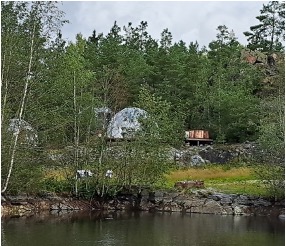
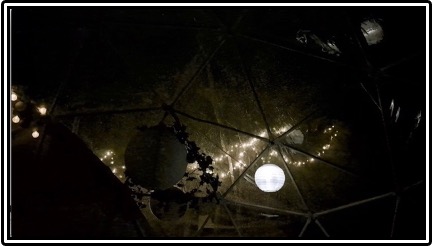
Prior to heading to Finland, I had been told by many people how quiet it was. People shared stories about eating in restaurants where nobody was talking. I never experienced that, but I got what they were saying. The downtowns of cities were not crowded, and I didn’t hear lots of traffic, car horns and the like. In Turku, we spent one night in the austere setting of a convent guesthouse, so even though we were right downtown it was nearly silent. When we were driving between cities, there were long stretches where both of my kids were listening to music on their headphones, and I didn’t have the radio on. Mile after mile of trees and fields passed by on relatively empty roads. For two nights, we stayed at a campsite outside of Pori called FinnDome. It consisted of several geodesic domes nestled in the woods next to a pond. Only one other dome was occupied, and only for the first night. Otherwise, we had the pond and the woods to ourselves. The domes were made of plastic sheeting, and most of the ceiling was transparent. That meant you could see the stars at night, and watch the rain as it was falling – without question, my favorite sound of the whole trip.